
The Institute for Advanced Study of the University of Amsterdam, which hosts our TuesdAIs in their illustrious building, celebrated its 10th anniversary with a four-day festival during which it opened its doors to the public with events and interactive sessions, reflecting on a decade of interdisciplinary research, while looking ahead to the questions of tomorrow. The AI, Media & Democracy Lab contributed with a workshop hosted by co-founder Natali Helberger, PhD candidate Agustin Ferrari Braun, and student assistant Leona Vețeleanu, all about alternative digital infrastructures: the current state of things, practical implementations of transitions from Big Tech like the Nextcloud pilot at UvA, and future needs across society for further development.
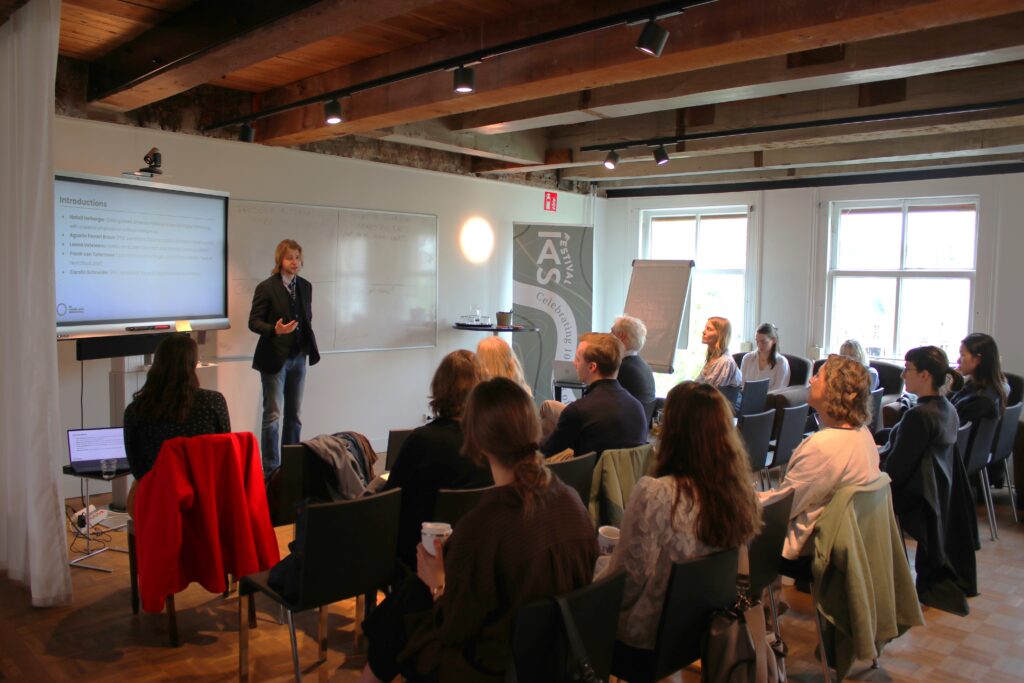

Digital autonomy has, for a long time, but now more than ever, been part of our Lab’s research agenda. As a core aspect of academic freedom, but also as a broader principle for all digital operations: our work in online environments should not be dependent on the economic, political, or strategic whims of Big Tech conglomerates, and we should look to more locally developed and decentralized alternatives.
In this context, we brought together participants for a blue-sky thinking exercise to start a deeper conversation about what sovereign alternatives are currently available, what about them is working well and what isn’t, and how to continue developing them in the future.
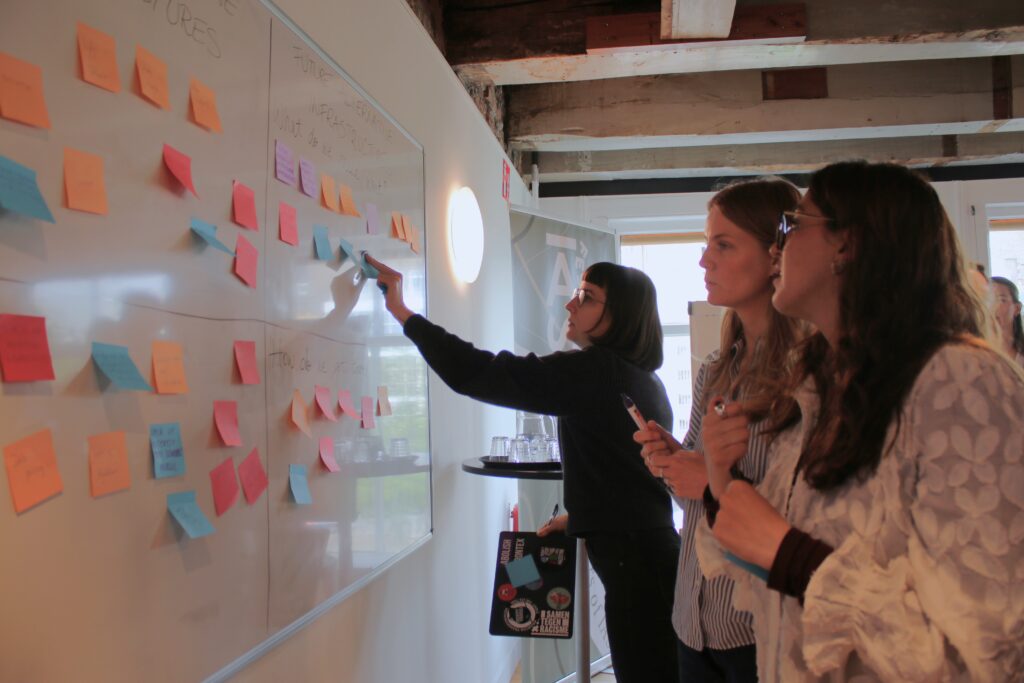

Interestingly, a pattern emerged throughout all the ideas put on the board. The positive sides of present alternatives were mainly expressed through values and ideals: people believe that alternative digital infrastructures of today do actually contribute to embodying independence, collaboration, organizational and institutional autonomy, data privacy, and more. When talking about negative points, those were expressed more in terms of tangible issues with user behavior, implementation, or execution (such as a lack of awareness or willingness to adopt new services, difficulties with migrating, underdeveloped policy and regulation, and problems with business models). What our participants found important for the future was also communicated through values: they called for a greater focus on ethics, transparency, and accessibility, but also for user-centric design and a prioritization of public interests. The avenues they named for reaching these ideal values placed a great emphasis on policy and governance, which were both mentioned as areas responsible for incentivizing development, adoption, and transitions to alternative sovereign infrastructures.
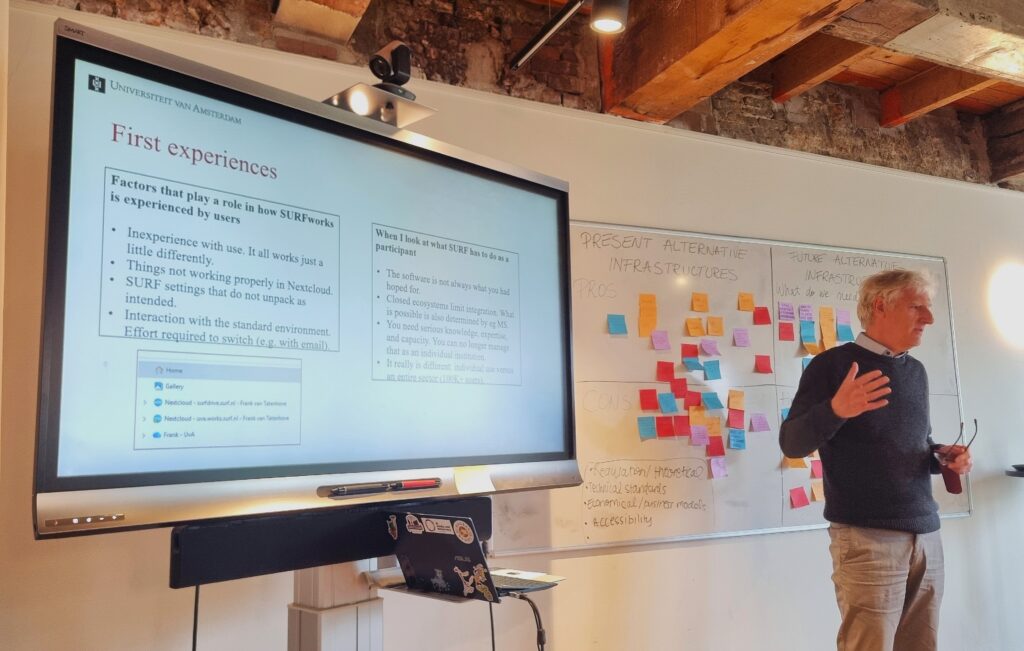
The fact that negative aspects and ways of moving forward were identified through such actionable points suggests that, at least amongst those at our workshop, a clear way to widely lower our dependence on Big Tech can emerge; there are steps to be taken, cases to be studied and stakeholders to be involved. We followed up this exercise with a practical example of transition efforts by Frank van Tatenhove, information manager at the UvA, and head of the Nextcloud pilot currently running at the university. His showcase was also complemented by input from Carolin Schneider, a PhD candidate at the UvA in work and organizational psychology with a focus on technology, who is conducting a diary study with the participants of the pilot to better understand their experiences and frictions with the new software. Together, Frank and Carolin created a realistic picture of infrastructure transitions: it can get difficult to keep the long-term advantages in mind when small quirks in a digital environment one is not used to create obstacles during daily workflows.
The session ended with an open discussion with the participants that touched on the combined conclusions of the exercise and the practical presentation. Namely, how infrastructure transitions can be better supported through governance, how to attract funding and public attention to the cause, and even how to better portray to less willing team members that the (perhaps less apparent) positives do outweigh the (more visible) negatives of getting used to a new cloud software environment.
Our final point, heeding the IAS Festival call to celebrate the past by imagining the future, consists of ideas for the Institute’s future research agenda, relating to this workshop’s topic: more theory-building, to bring together digital infrastructure ideals, values, definitions and philosophies; case studies on existing implementations, to identify hurdles and opportunities for improvement; and more outreach to society and stakeholders, to increase the awareness and momentum of the sovereign digital infrastructure movement.
